
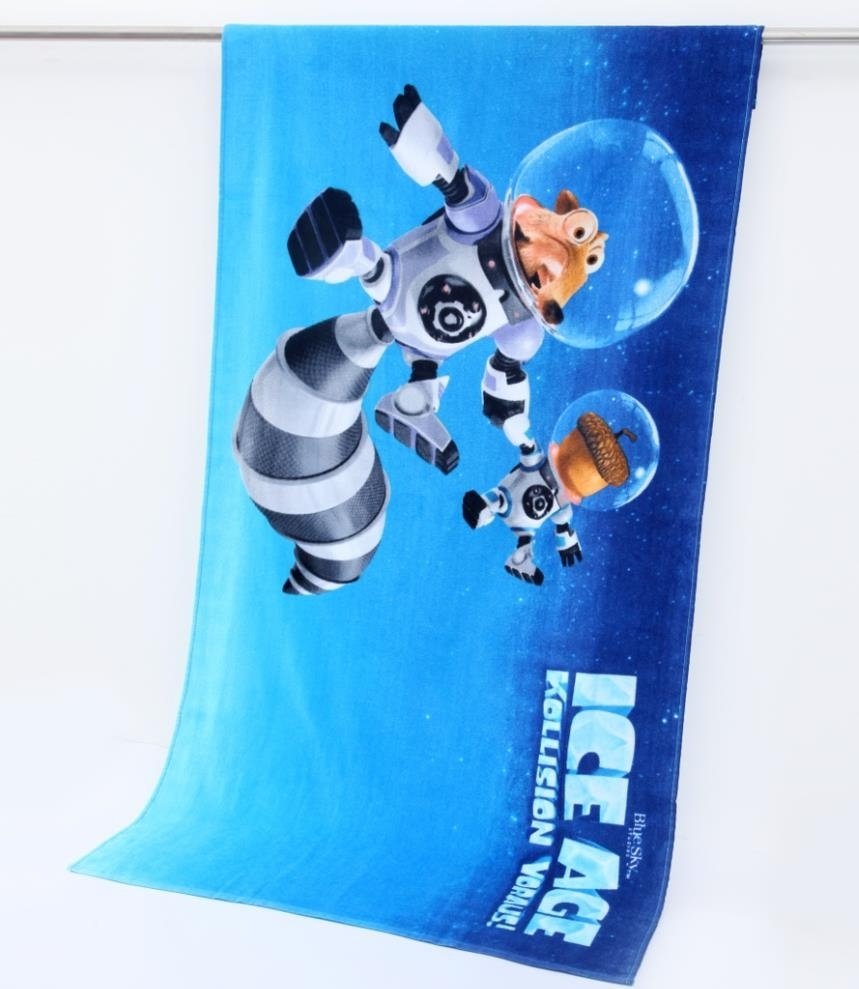
How Are Screen Printed Beach Towels Produced?
Screen printed beach towels are made using a traditional textile printing process that transfers ink through a mesh screen onto the towel fabric. This method is widely used for custom beach towels because it produces vibrant colors, excellent durability, and cost-effective results for large production runs.
1. Artwork Preparation
The process begins with creating or receiving the design. The artwork is separated into individual colors because each color requires its own printing screen.
For example:
- A 3-color logo needs 3 separate screens.
- Complex designs with many colors require multiple screens.
The design is then converted into film positives that will be used to create the printing screens.
2. Screen Making
A fine mesh screen is stretched tightly over a frame and coated with a light-sensitive emulsion.
The film positive is placed on the screen and exposed to UV light. Areas blocked by the artwork remain soft, while exposed areas harden. After washing out the soft emulsion, the design is left as open mesh areas where ink can pass through.
3. Towel Fabric Preparation
Beach towels are usually made from:
- 100% cotton
- Cotton velour
- Terry cotton
- Cotton-polyester blends
- Microfiber fabrics
Before printing, the fabric is cleaned and prepared to ensure proper ink adhesion and color consistency.
4. Printing the Design
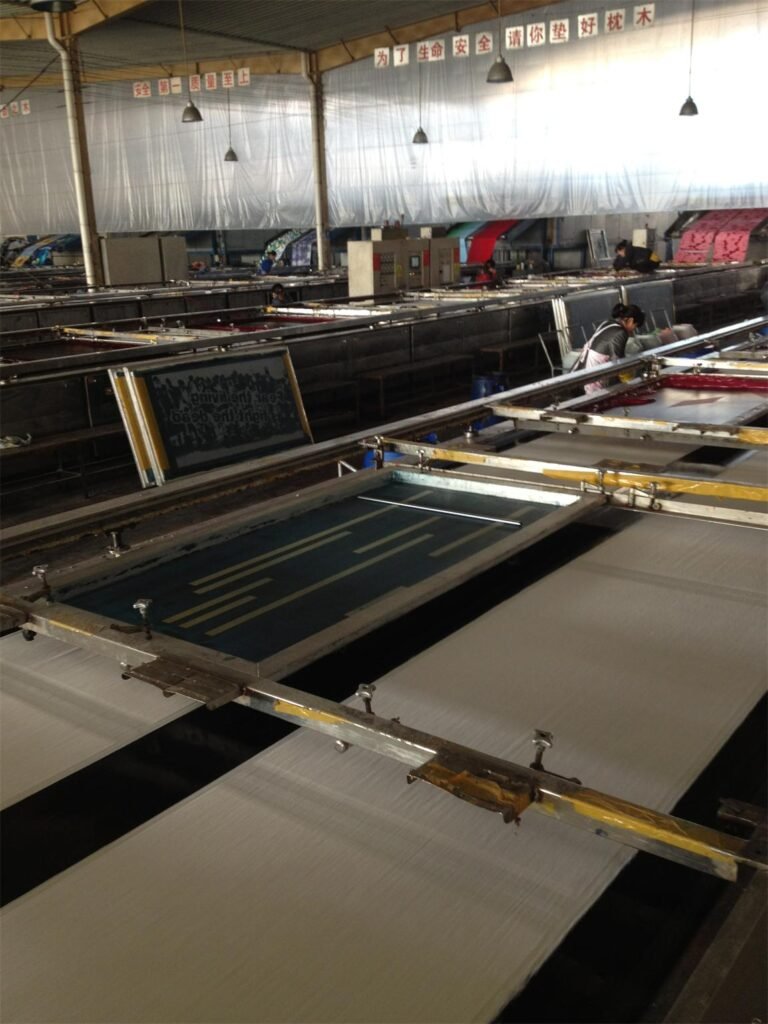
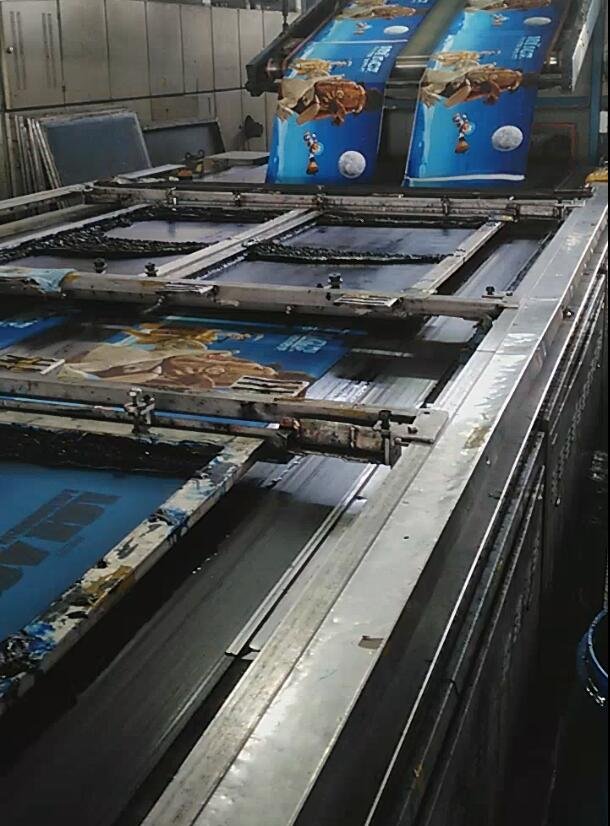
The towel fabric is placed on a printing table or automatic printing machine.
For each color:
- The corresponding screen is aligned over the fabric.
- Ink is poured onto the screen.
- A squeegee pushes the ink through the open mesh areas.
- The printed layer is dried or flash-cured.
- The next color is printed using another screen.
This process continues until all colors are applied.
5. Drying and Curing
After printing, the towels pass through a drying oven or heat tunnel.
The heat:
- Cures the ink
- Improves wash resistance
- Enhances color durability
- Prevents cracking or fading
Proper curing is essential for long-lasting beach towel prints.
6. Cutting and Sewing
If the towels are printed before being cut into finished products, the printed fabric is:
- Cut to size
- Hemmed around the edges
- Inspected for quality
The towels are then folded and prepared for packaging.
7. Quality Inspection
Each towel is checked for:
- Color accuracy
- Print registration
- Ink coverage
- Fabric defects
- Overall appearance
Only approved products move to final packaging.
Advantages of Screen Printed Beach Towels
Vibrant Colors
Screen printing produces bright, bold colors that stand out on cotton and velour towels.
Excellent Durability
The ink penetrates and bonds well with the fabric, making the design resistant to repeated washing and beach use.
Cost-Effective for Bulk Orders
Once screens are created, large quantities can be produced efficiently at a low per-unit cost.
Professional Appearance
Screen printing delivers sharp logos, promotional graphics, and brand designs with consistent quality.
Screen Printing vs. Digital Printing
| Feature | Screen Printing | Digital Printing |
|---|---|---|
| Best for | Large orders | Small orders |
| Color Vibrancy | Excellent | Very good |
| Setup Cost | Higher | Lower |
| Unit Cost | Lower in bulk | Higher in bulk |
| Durability | Excellent | Very good |
| Complex Full-Color Images | Limited | Excellent |
Common Applications
Screen printed beach towels are commonly used for:
- Resort and hotel branding
- Promotional giveaways
- Sports teams
- Corporate events
- Retail beach towel collections
- Custom souvenir towels
Because of its durability, color brilliance, and economical production for large quantities, screen printing remains one of the most popular methods for manufacturing custom beach towels worldwide.